Sustainable Water Supply System.
This project was designed to support communities in impoverished regions with limited access to clean water for both consumption and agriculture. The system integrates sustainability, accessibility, and practical engineering through three core components — a water storage unit, a solar-powered water pump, and a solar panel array — all engineered for reliability in remote environments with minimal infrastructure.
Groundwater serves as the primary water source, identified through existing hydrogeological studies of the region. Once located, the groundwater is accessed using a drill, enabling efficient well creation even in challenging terrain. The solar-powered pump then raises the water through a network of pipes into the storage system, which is fitted with integrated filtration units to ensure the water is safe for drinking and domestic use.
The project focused on Ethiopia, aligning with the United Nations Sustainable Development Goal 6 (Clean Water and Sanitation). A target region with limited progress on SDG-6 was selected using geographical and socio-economic data analysis. Emphasis was placed on renewable energy use, low-maintenance operation, and locally sourced materials, ensuring long-term sustainability and community ownership.
This project demonstrates the intersection of mechanical design, sustainability, and humanitarian engineering, showcasing how thoughtful engineering solutions can enhance quality of life and advance global development goals.
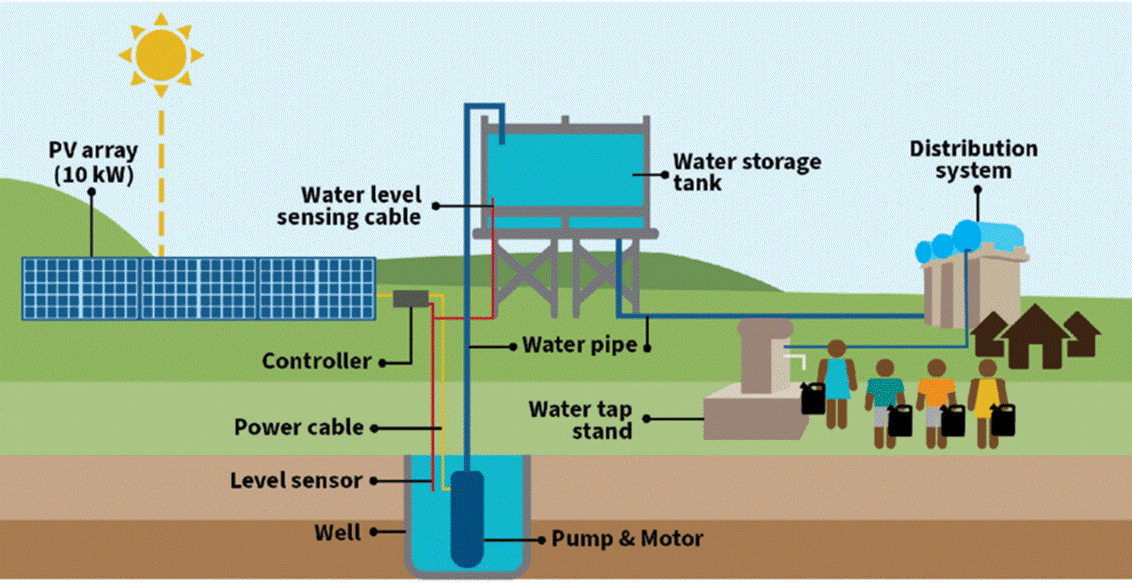
Basic Concept of Water Retrieval System
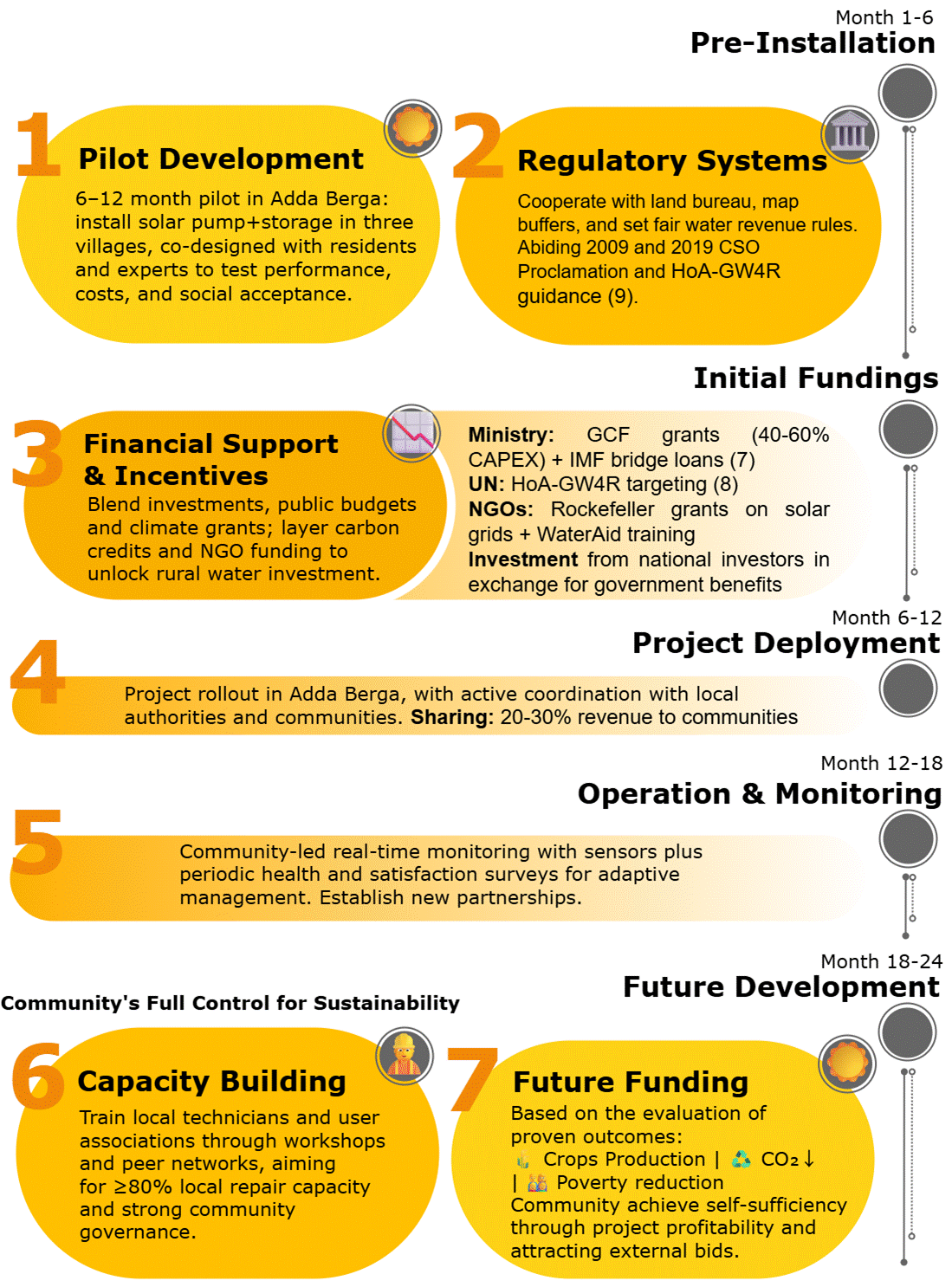
Water Pump System
A custom-designed centrifugal impeller engineered to efficiently lift groundwater through the pumping system. Modelled using parametric CAD, the geometry features backward-curved blades to optimise flow rate, minimise turbulence, and reduce cavitation. Designed for reliable operation in off-grid pumping setups, with form and blade curvature developed to maximise hydraulic efficiency under low-power input conditions.
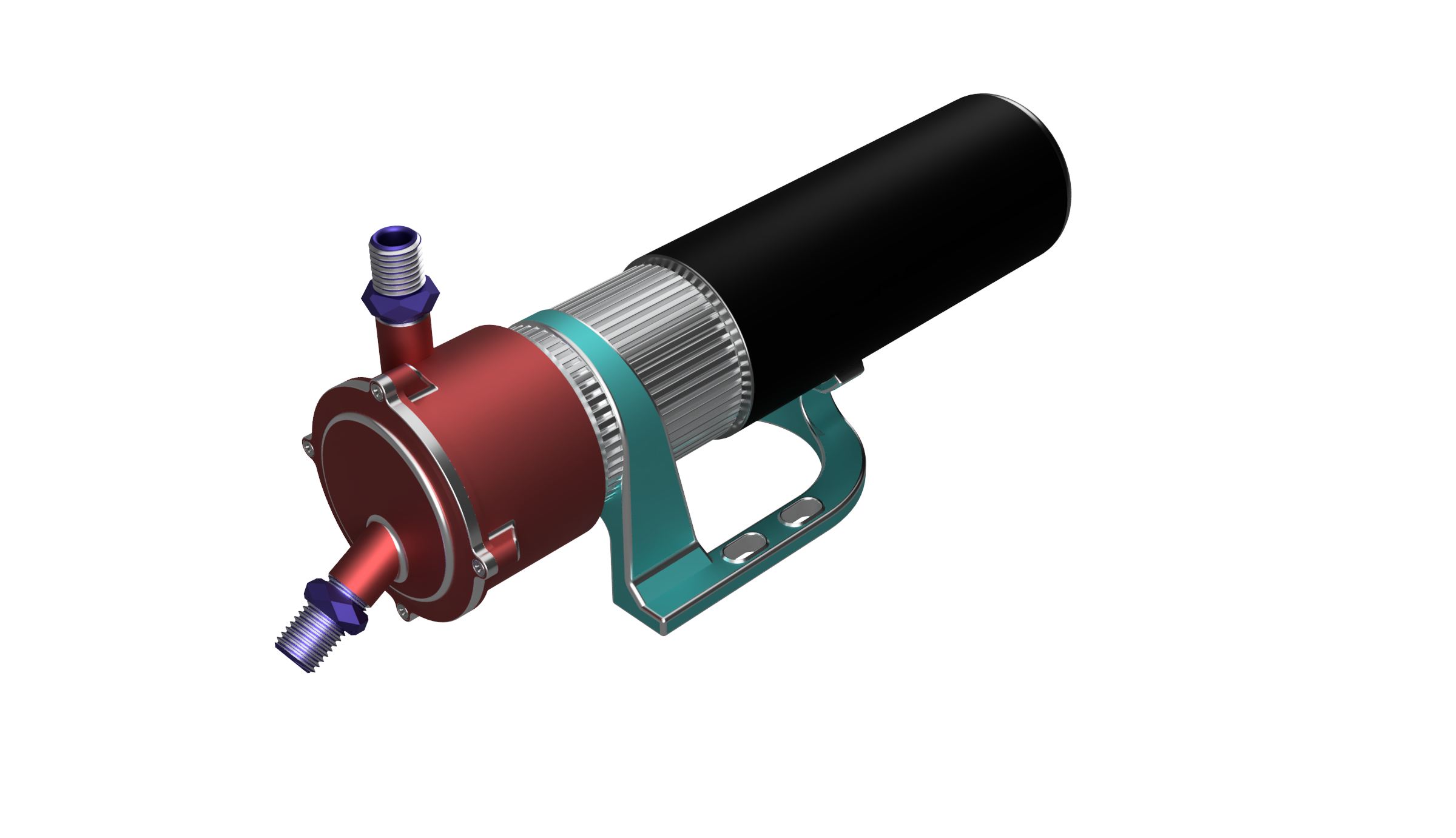
Water Pump
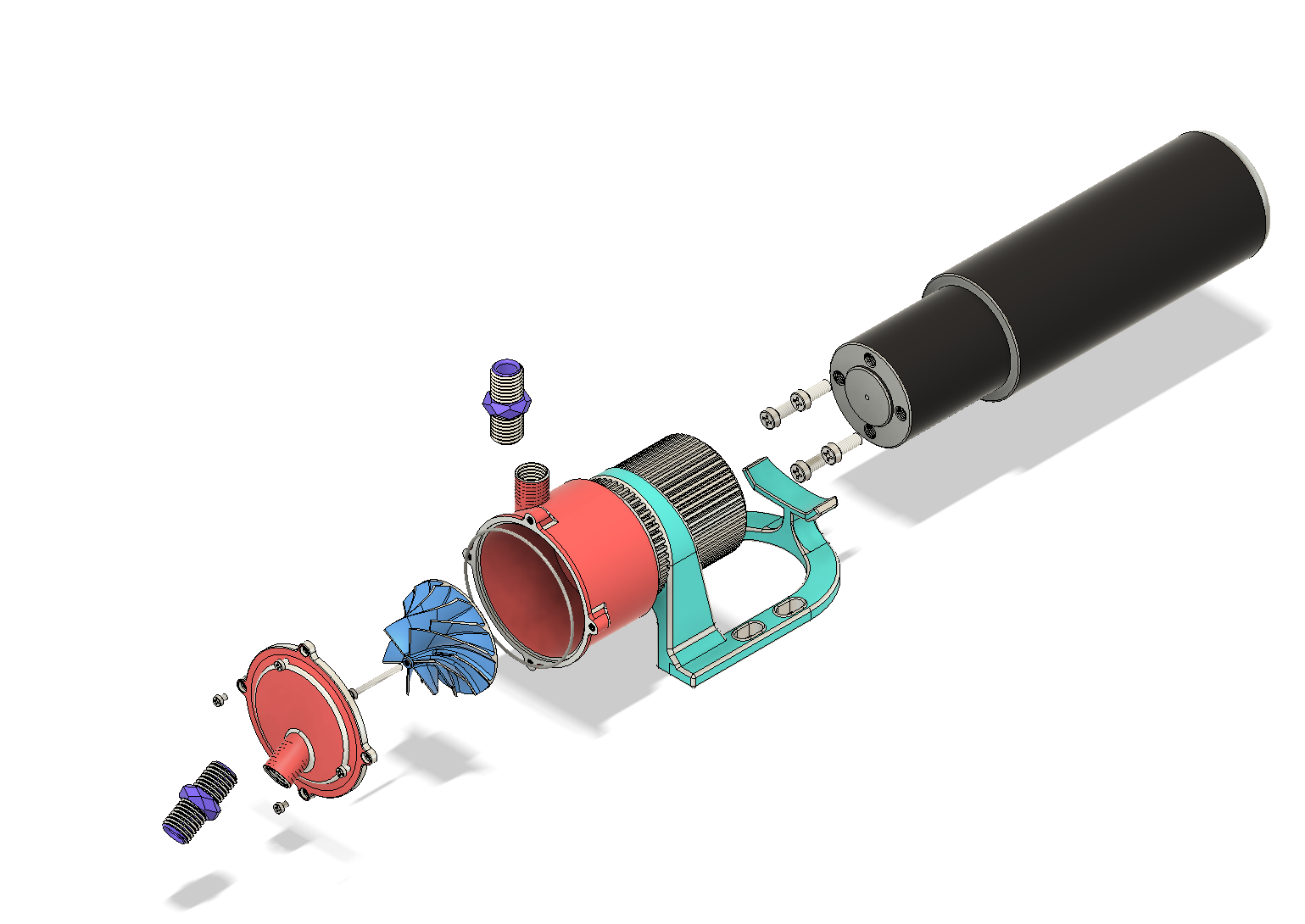
Exploded View of Water Pump
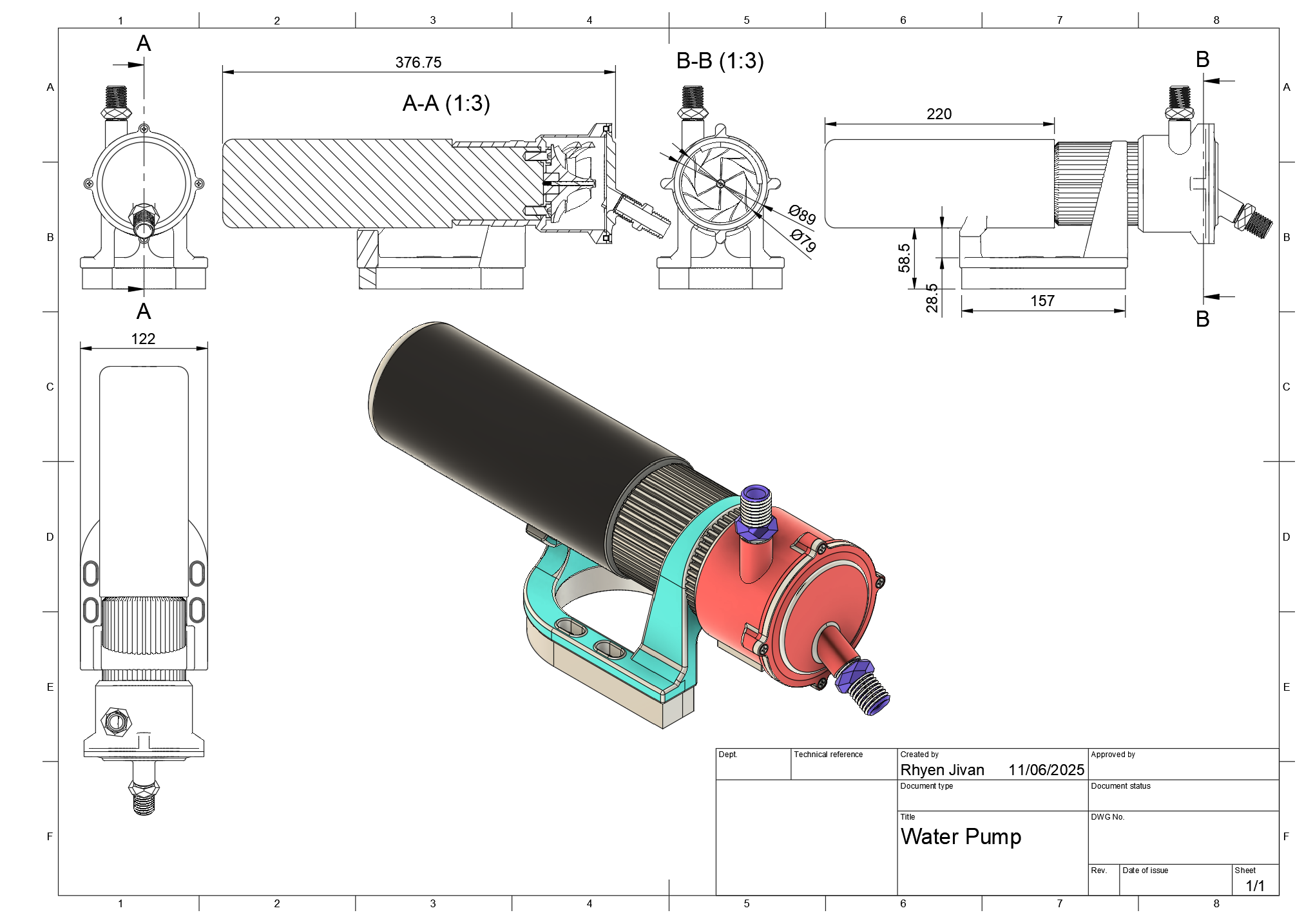
Engineering Drawing of Water Pump

Solar Panel Array
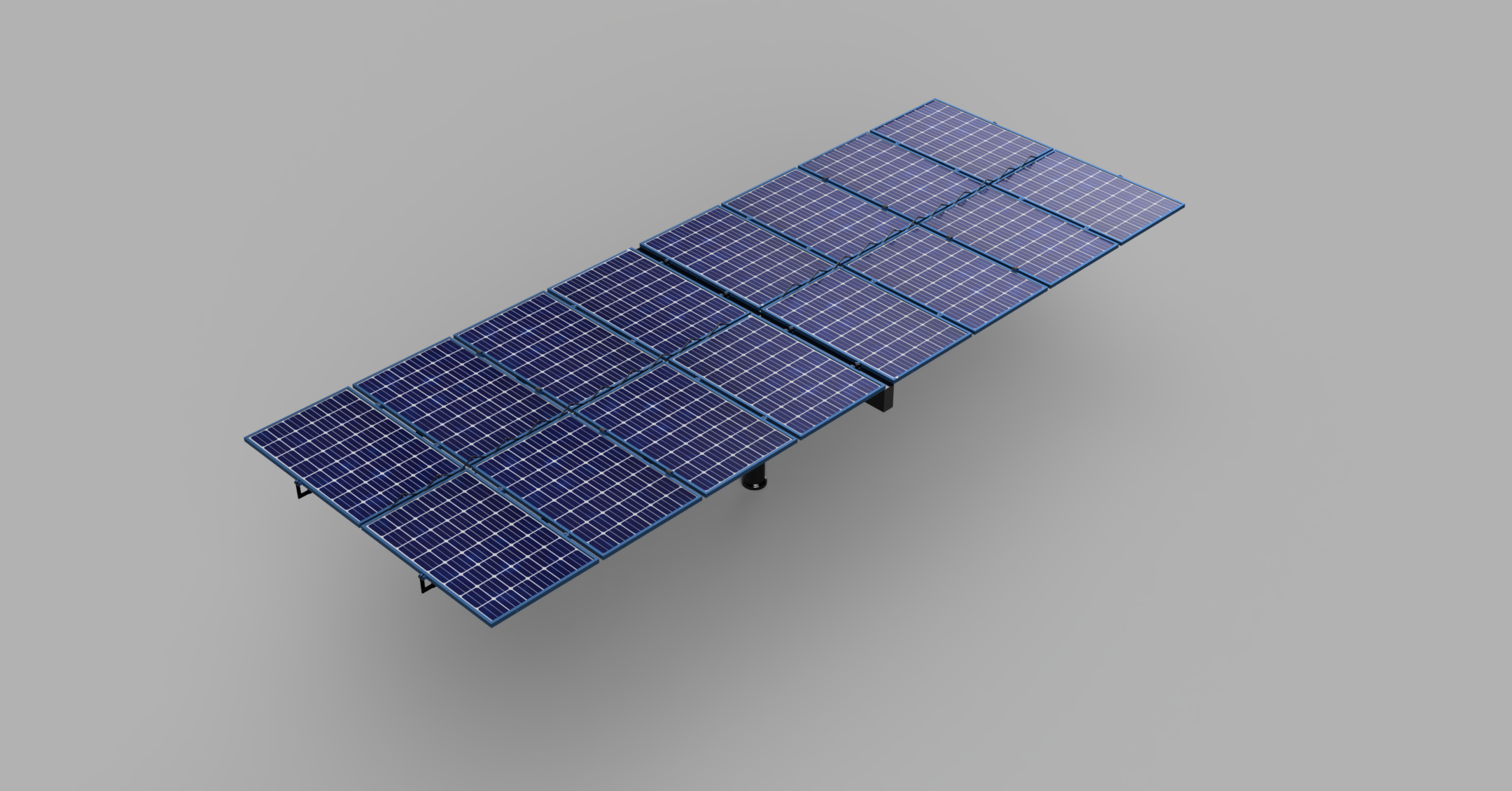
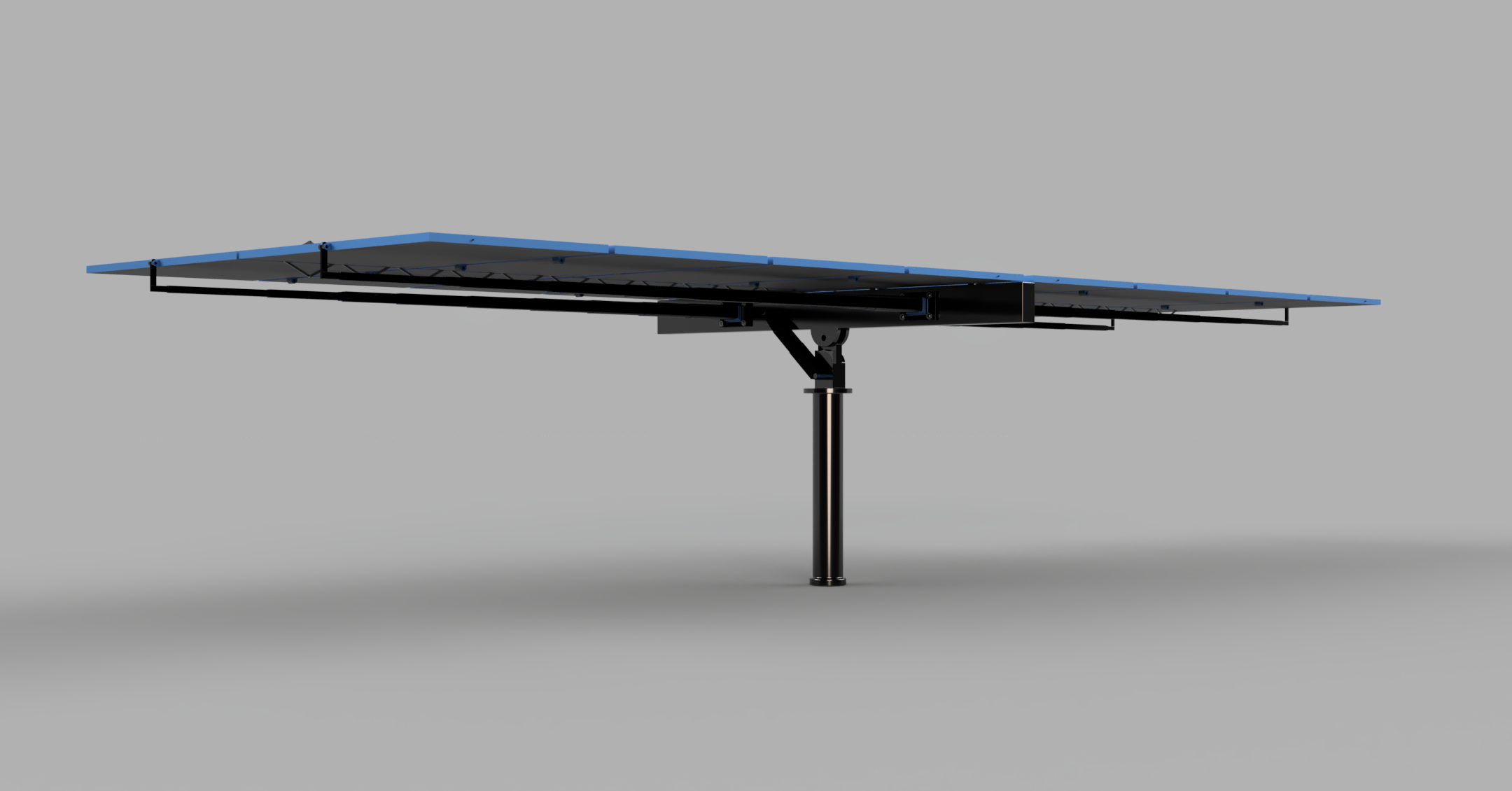
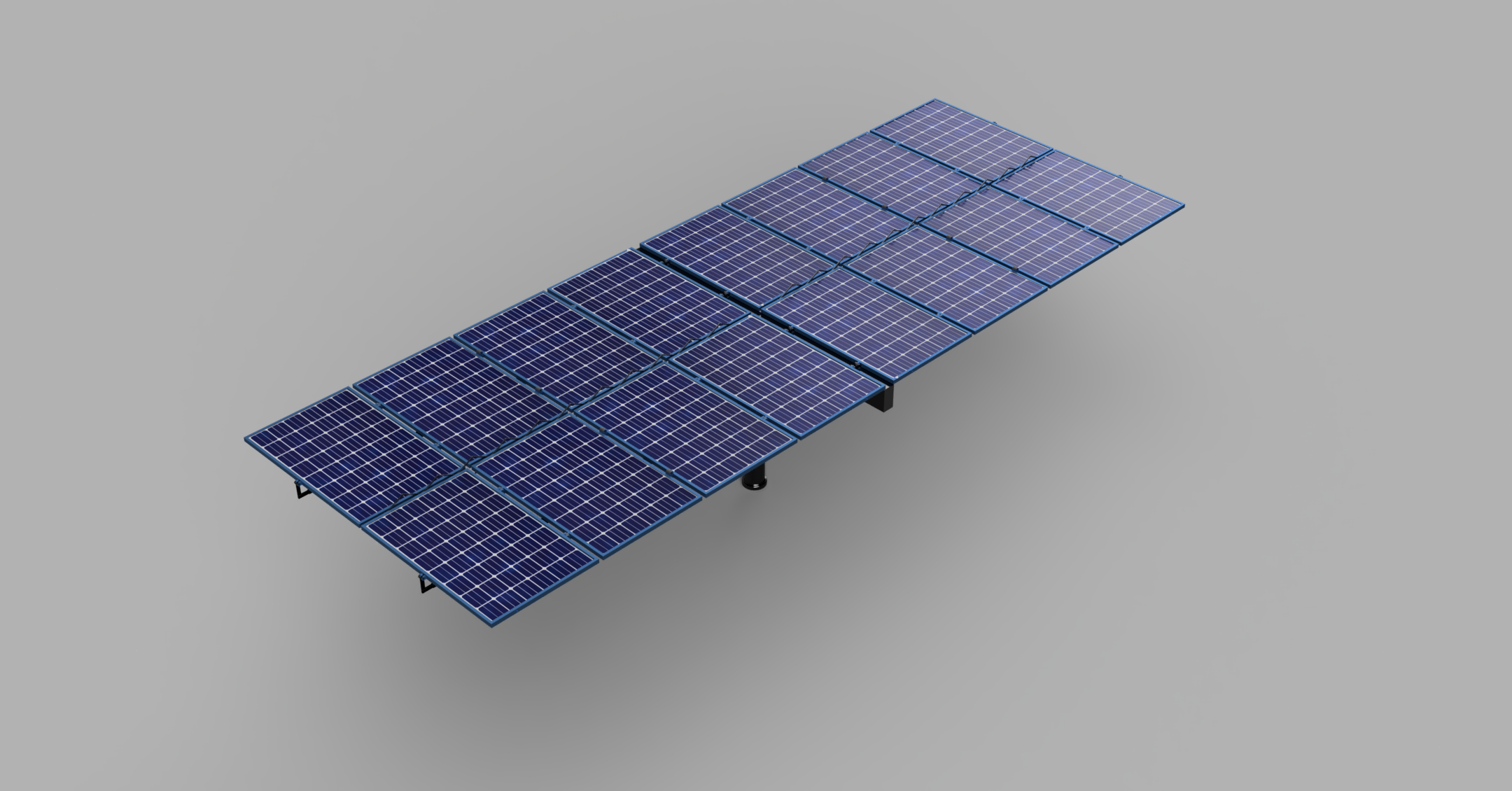
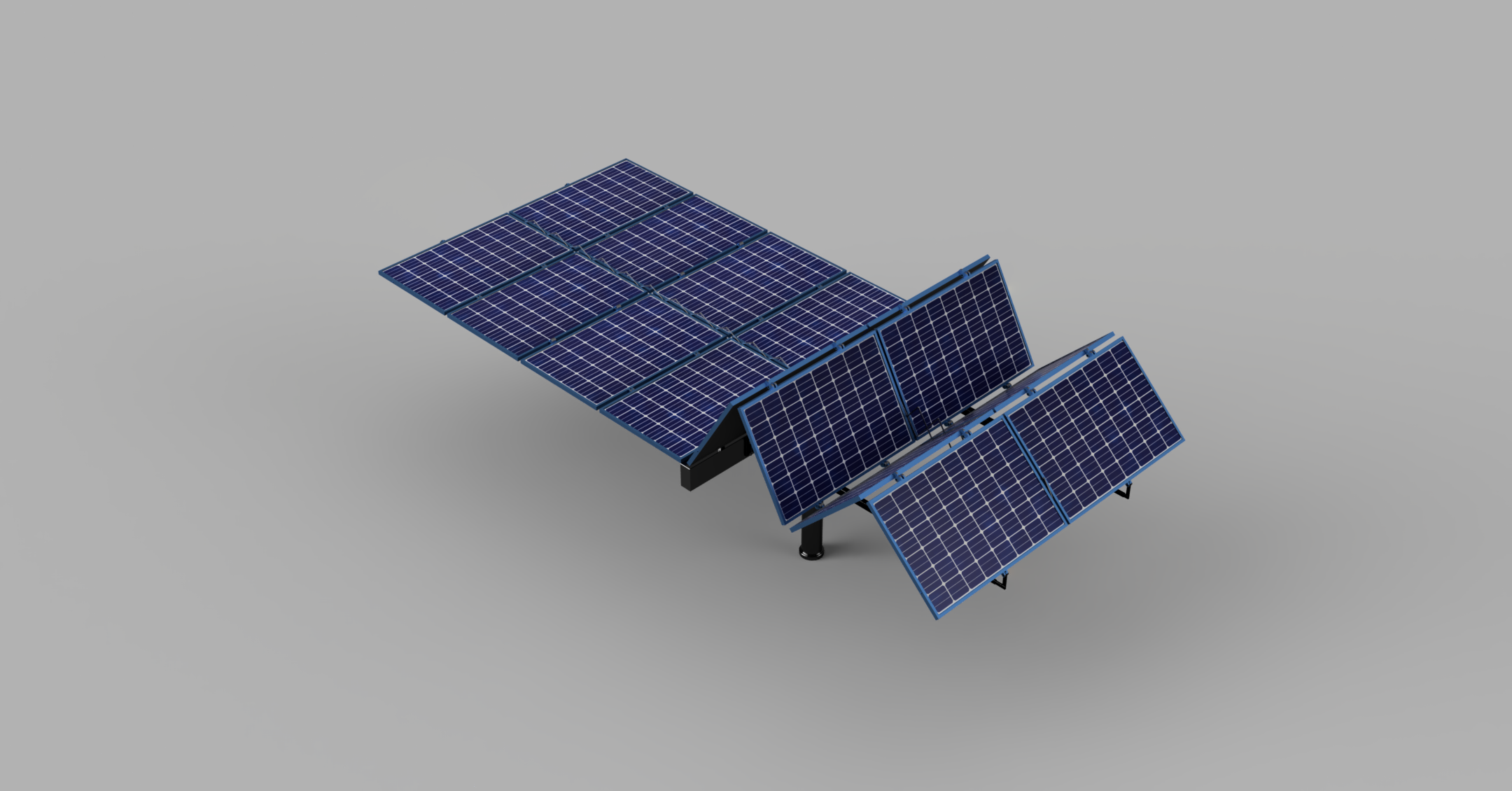
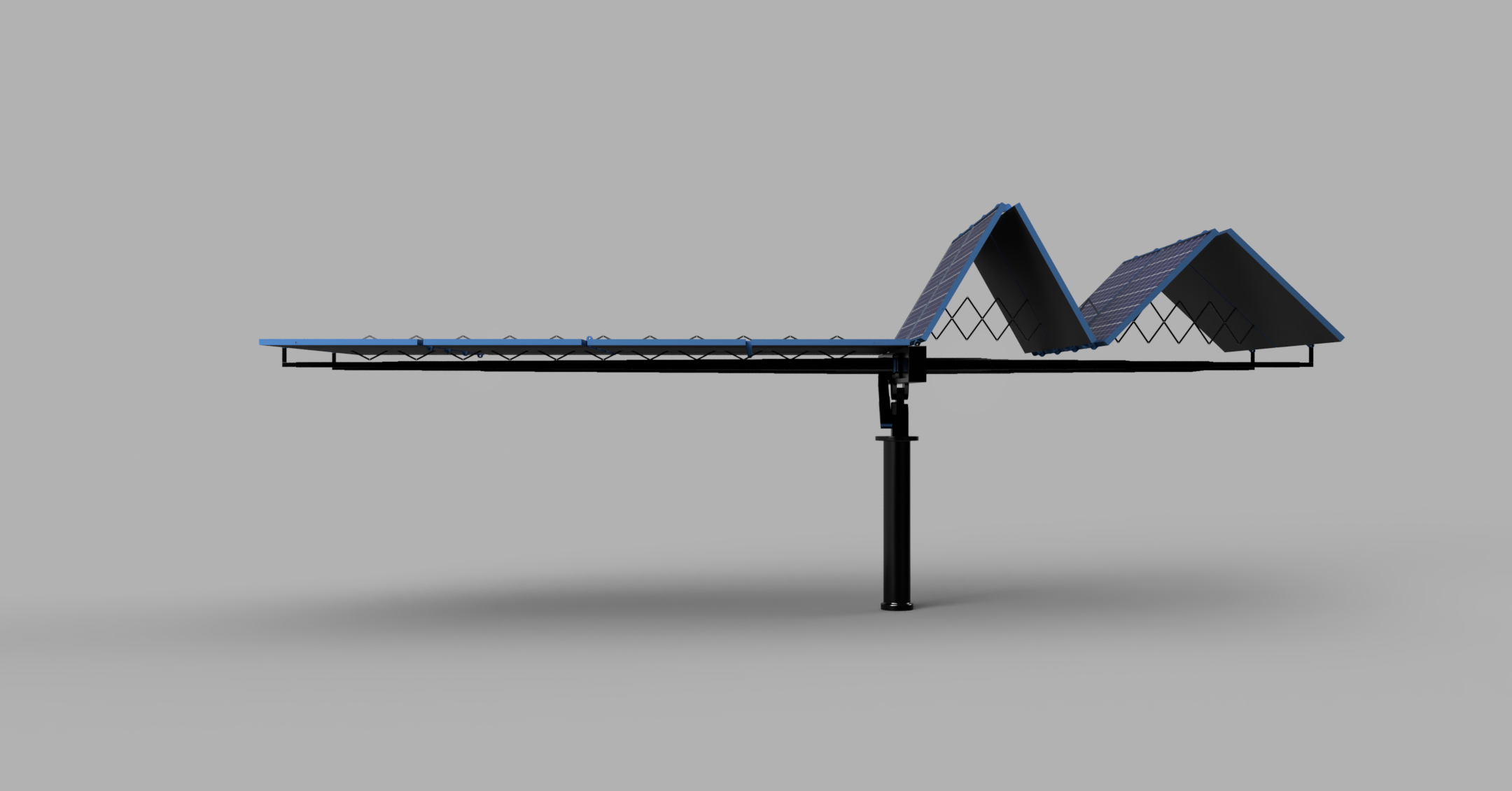
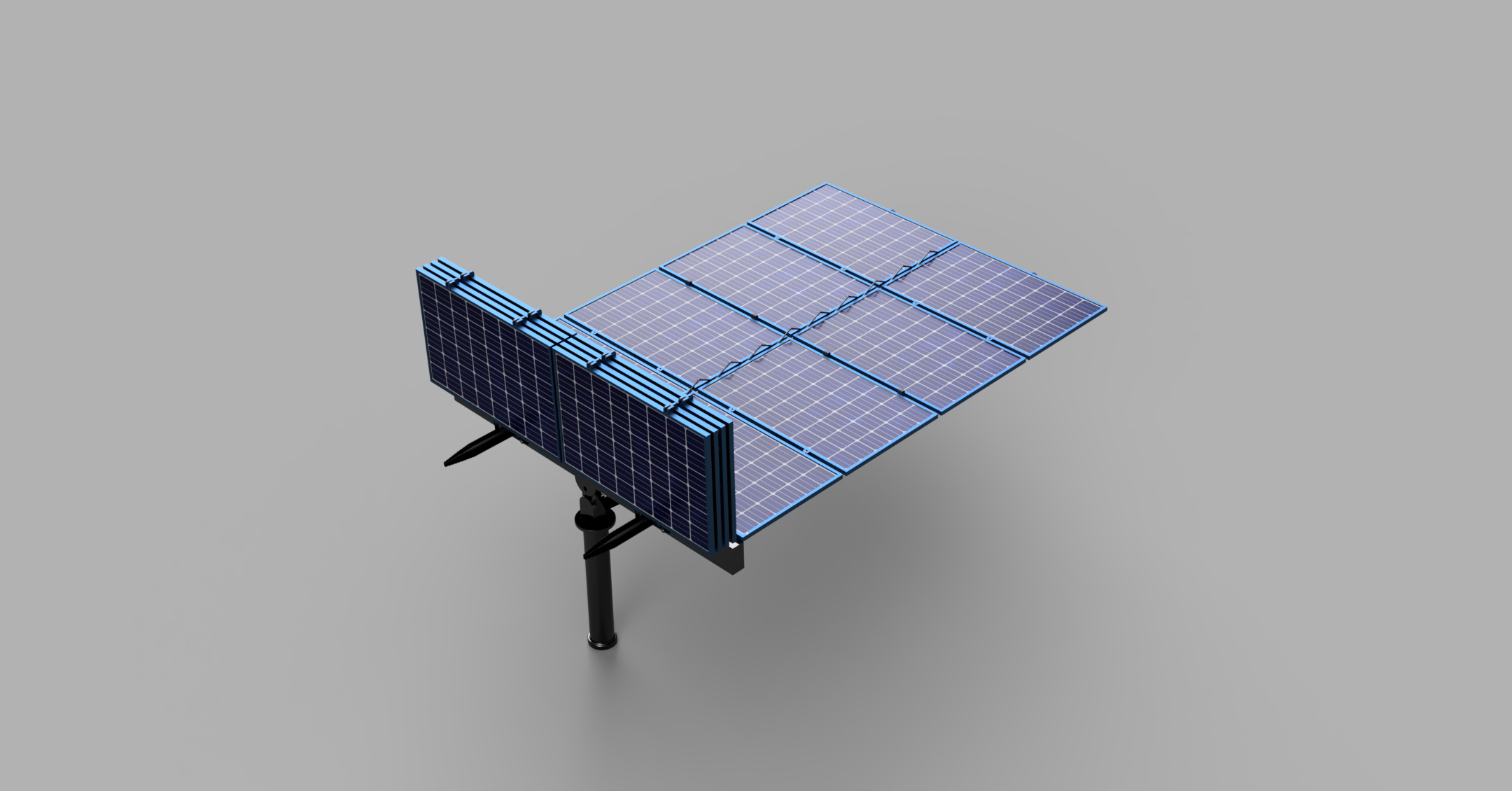
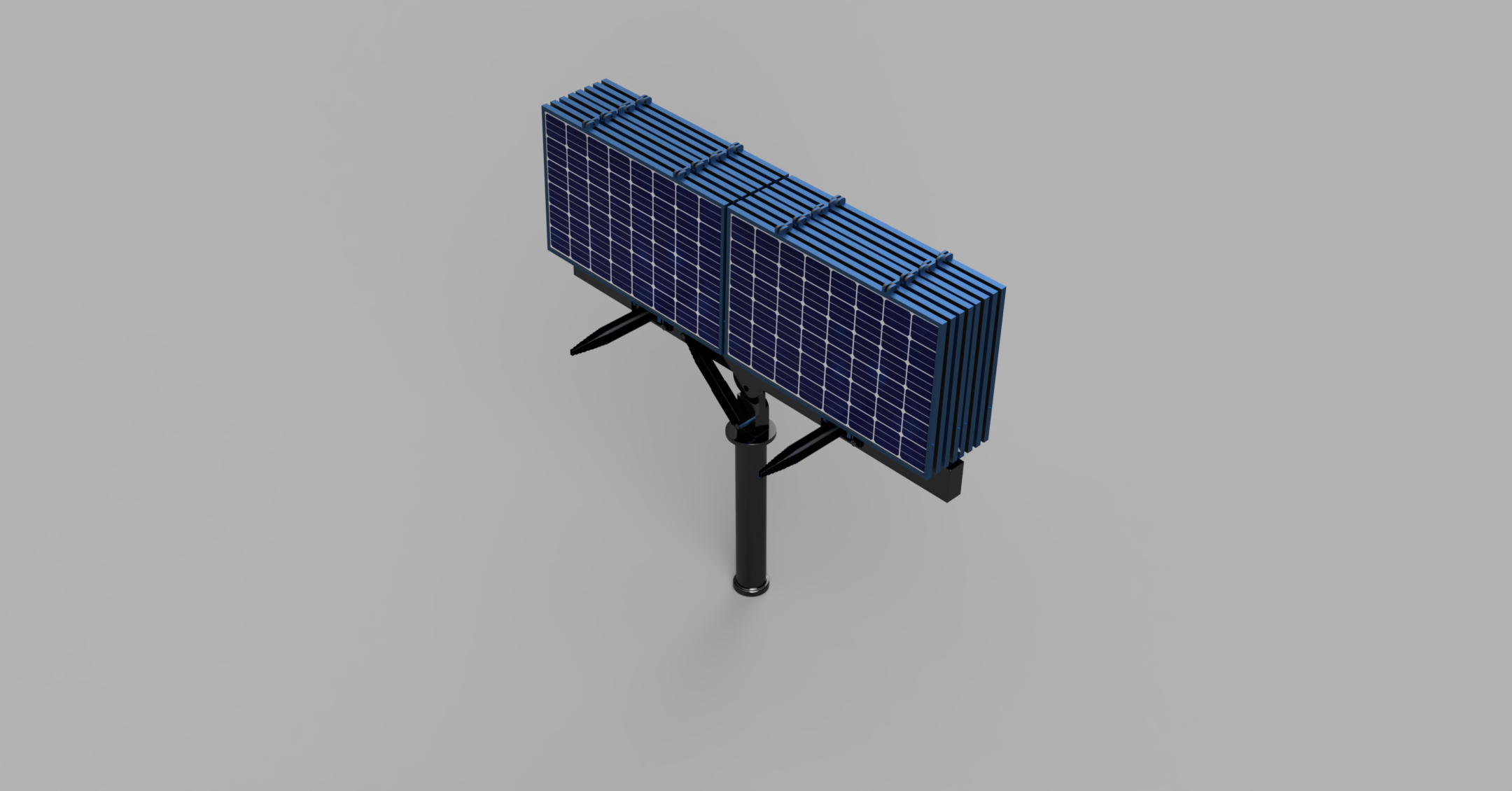
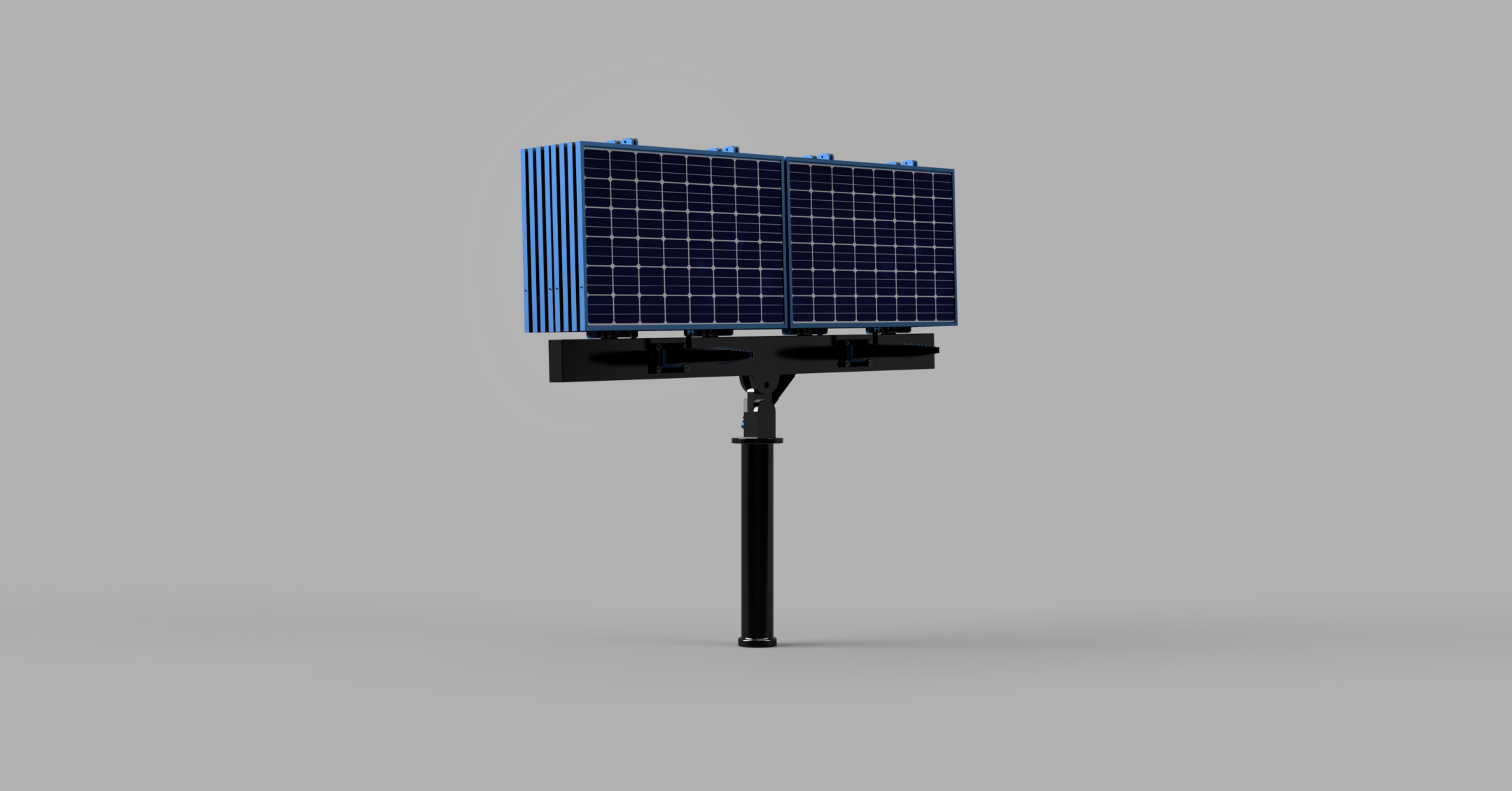
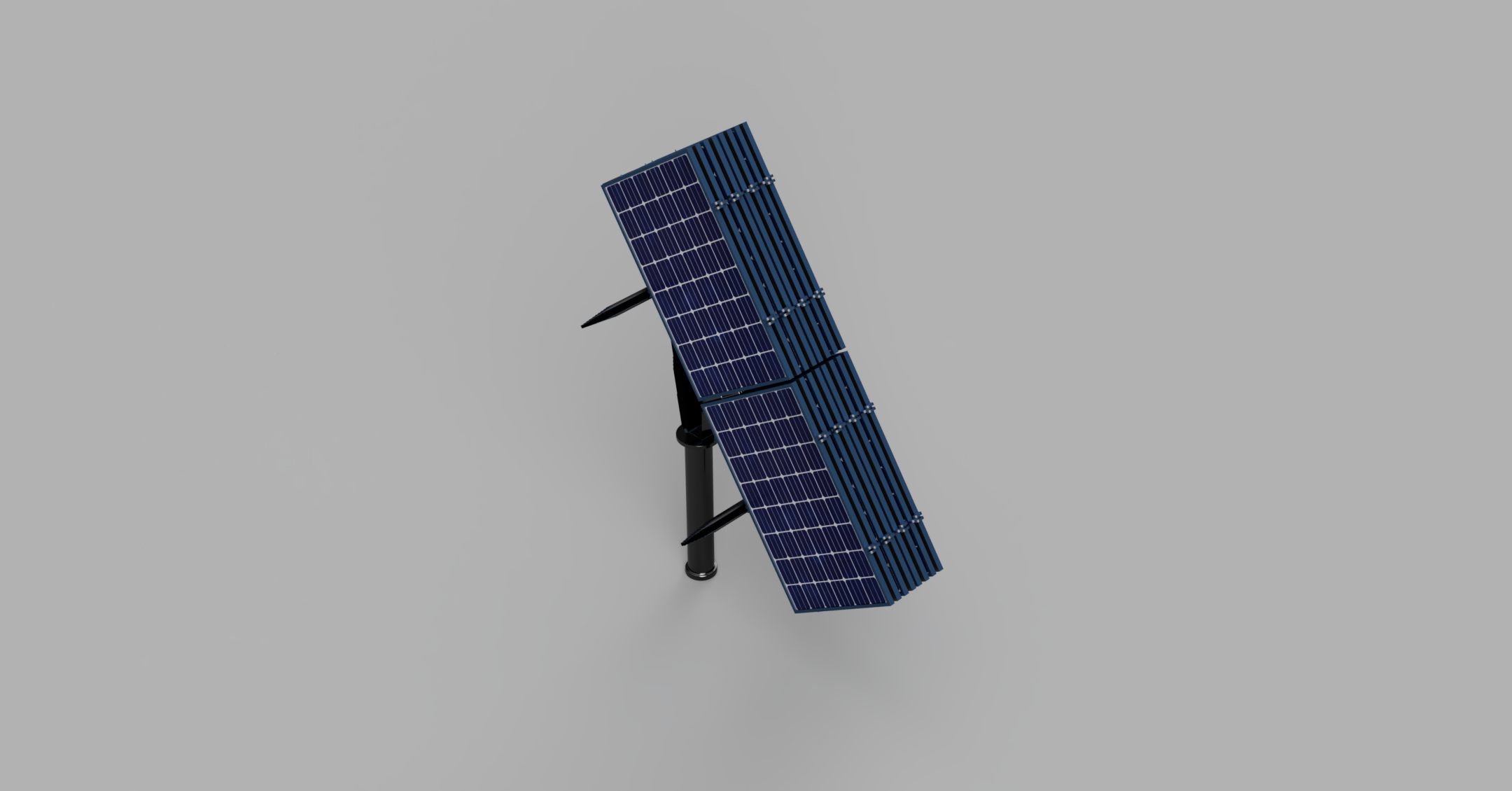
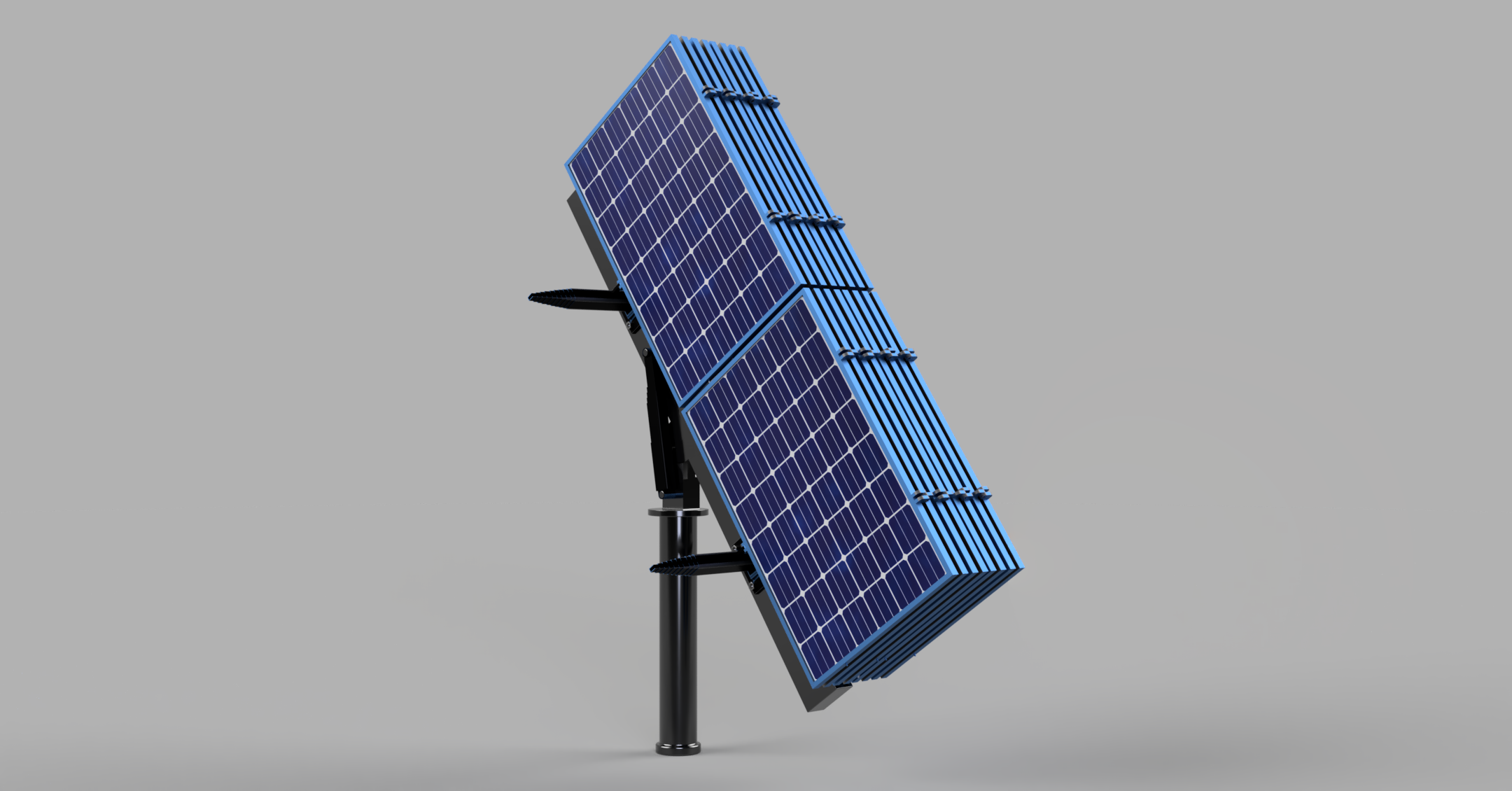
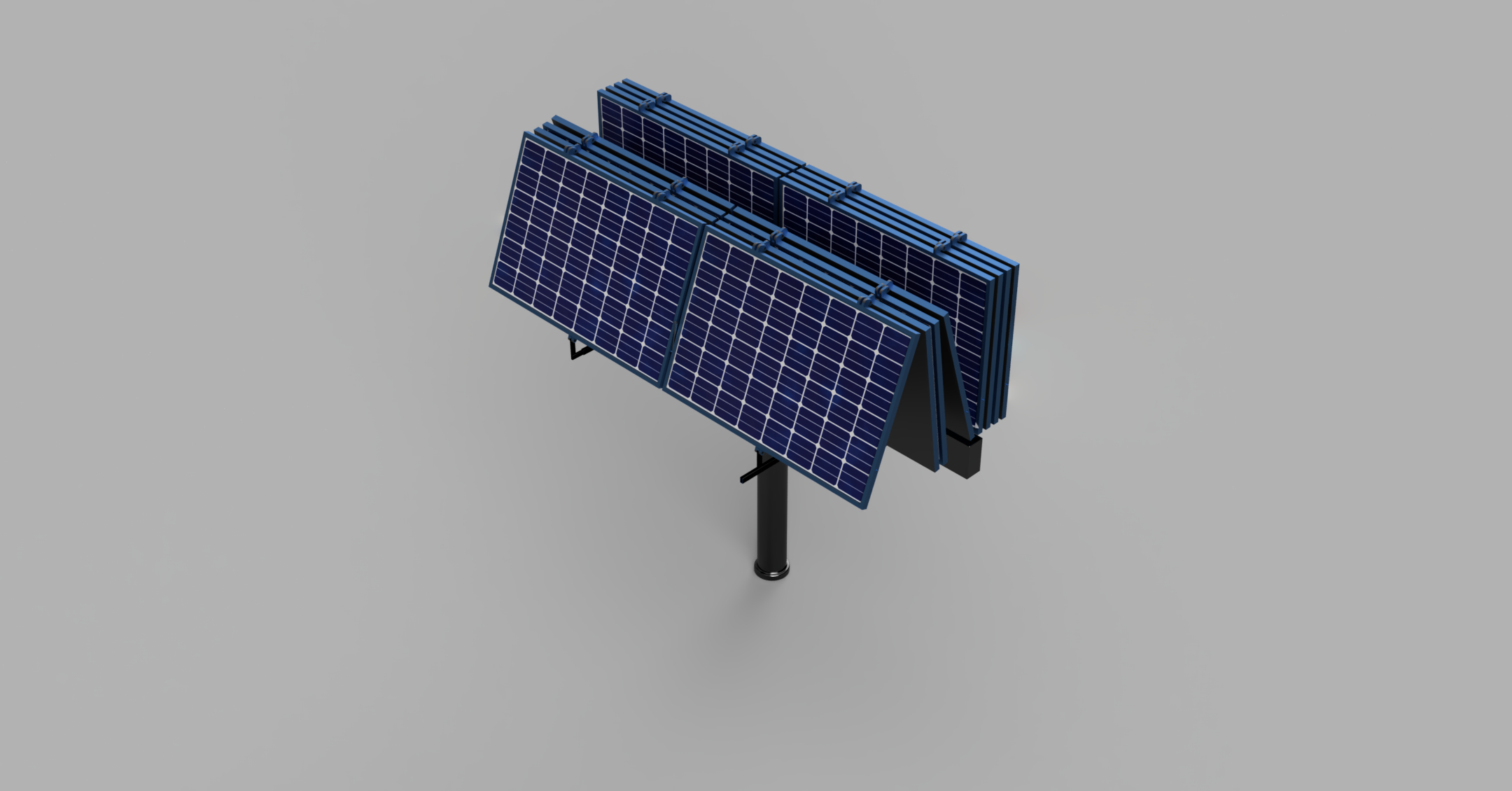
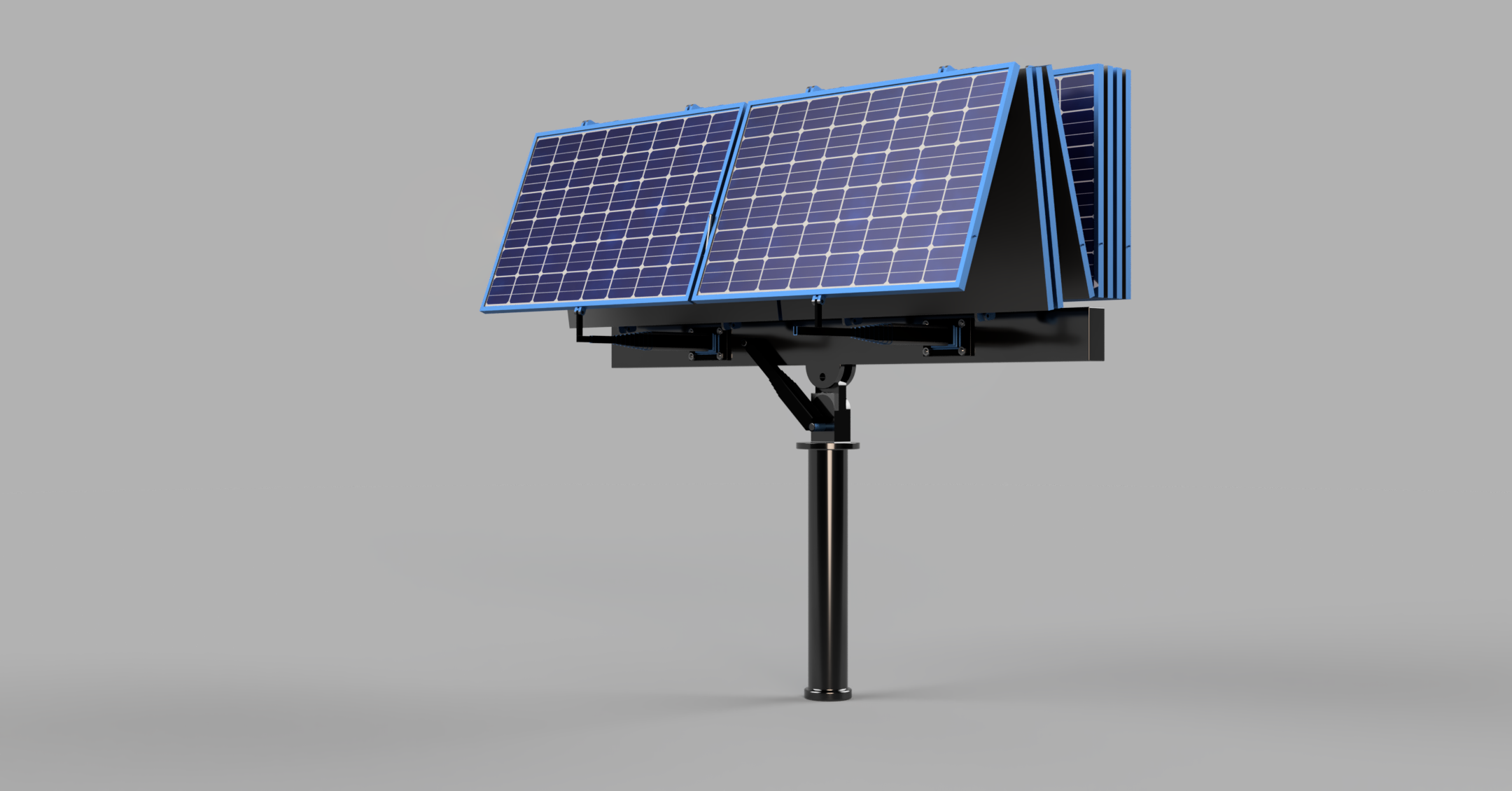
A compact, hydraulically powered solar array designed for efficient energy capture and portability. The system features two extendable wings, each with eight solar panels, that unfold and rotate about a central axis to follow the sun throughout the day. Powered by hydraulics, the mechanism allows smooth deployment, rotation, and retraction, maximising sunlight exposure while maintaining a compact form when stowed. Solar panels take advantage of Ethiopia’s high solar irradiance.
Specs
Each solar panel has an area of 1.85 m² and is monocrystalline, selected for its superior efficiency per unit area. Each panel is rated at 350 W, providing a high energy output in compact form. With a total of 16 panels, the array generates approximately 44.8 kWh of energy per day, assuming an average of 8 hours of effective sunlight. This output is sufficient to power the water pump and filtration system while supporting sustainable operation within the targeted region.
Water Storage System
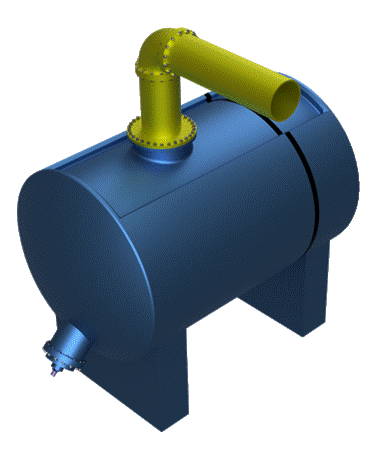
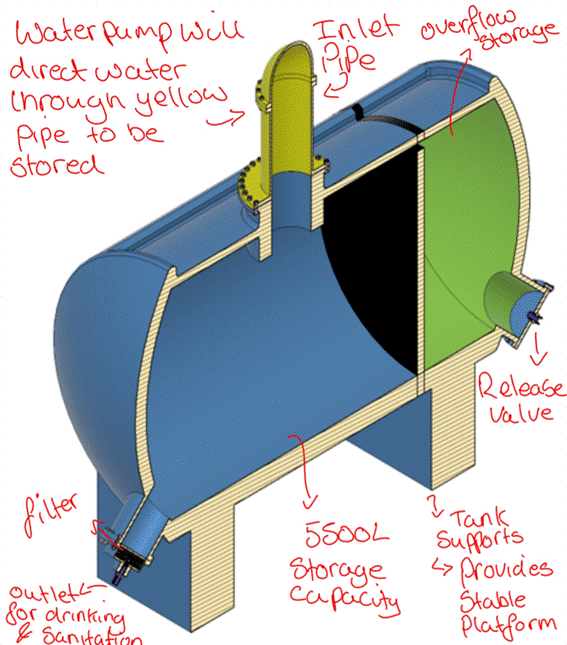
The water storage tank is designed to receive groundwater pumped from below the surface and filter it for safe use. Integrated filtration units remove impurities, ensuring a reliable supply of clean drinking water. An internal divider functions as an overflow barrier, preventing backflow and protecting the filtration system from being jeopardised during periods of excess inflow or pressure variation. The tank also includes dedicated outlet taps for convenient access, allowing users to easily draw water for consumption or community use.
Specs
Total Capacity: 5500 L
Inlet Pipe: Receives groundwater directed from the pump for storage
Filtration System: Integrated filter ensures safe water for drinking and sanitation
Internal Divider: Acts as an overflow barrier to prevent backflow and protect filtration integrity
Overflow Section: Provides controlled excess water storage
Outlet Tap: Allows easy access for clean water use
Release Valve: Enables maintenance and drainage control
Tank Supports: Provide a stable and secure platform for the system
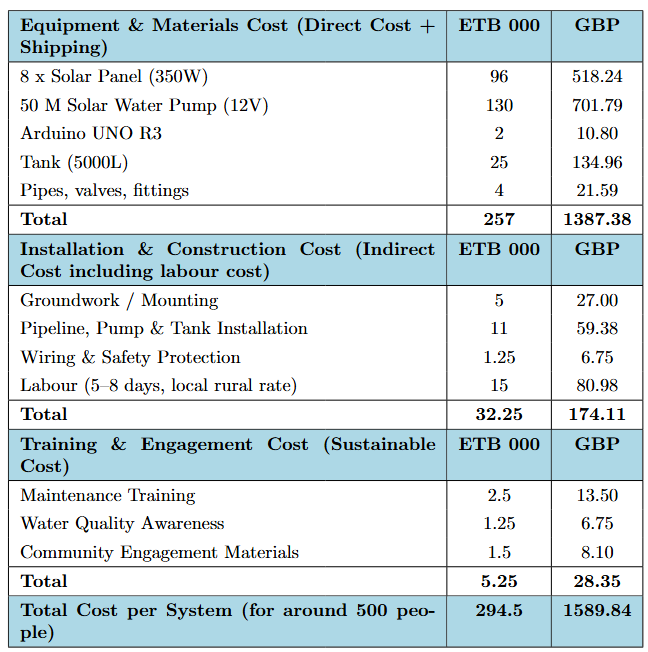
Cost Analysis
Solution Summary
Reliable Water Access: Provides a stable and continuous supply of clean water for both domestic and community garden use, even during dry seasons or drought conditions.
Sustainability: Operates entirely on solar energy, reducing dependence on grid electricity and cutting CO₂ emissions by an estimated 80.56 kg per week.
Resilience: Incorporates storage tanks (5500 L each) to ensure water availability for up to two days in the event of pump failure or low sunlight conditions.
Efficiency: Automated control using ultrasonic sensors regulates water flow between the well and storage, preventing overflow and conserving energy.
Scalability: Designed to serve 150 households (approx. 500 residents) initially, with capacity to expand up to 400 households through increased production (up to 20,000 L/day).
Community-Centric: Low-maintenance, locally manageable design encourages community ownership and supports long-term water security in rural areas.
Failsafes
-
In case of emergency power outages, faults with the solar panel array. A 48W lithium ion battery will act as auxiliary power
-
To prevent the water storage tank from being overfilled potentially disrupting the entire system, Two ultrasonic sensors will be used this allows for the system to run independently and strains the community less. One sensor is placed in the well to ensure the water level is sufficient and the other placed in the tank to infer if there is room. Controlled by an Arduino board. If any malfunction occurs with the sensors the internal divider will allow for excess water to be stored and can be used for agriculture.